The holidays are a time for family, friends, and traditions. One of the most cherished traditions for many families is the annual trip to a Christmas tree farm to select the perfect tree. There’s something special about venturing out into the crisp winter air, surrounded by the scent of pine needles, to find the perfect tree for your home.
Whether you want the full experience of choosing and cutting your own tree or finding the perfect pre-cut tree, our guide is here to guide you to one of the many great Christmas tree farms in McHenry County.
One very important thing to note is that, unlike pop-up tree lots and other retailers, local tree farms often open up around or shortly after Thanksgiving and may only be open for a few weeks or weekends.
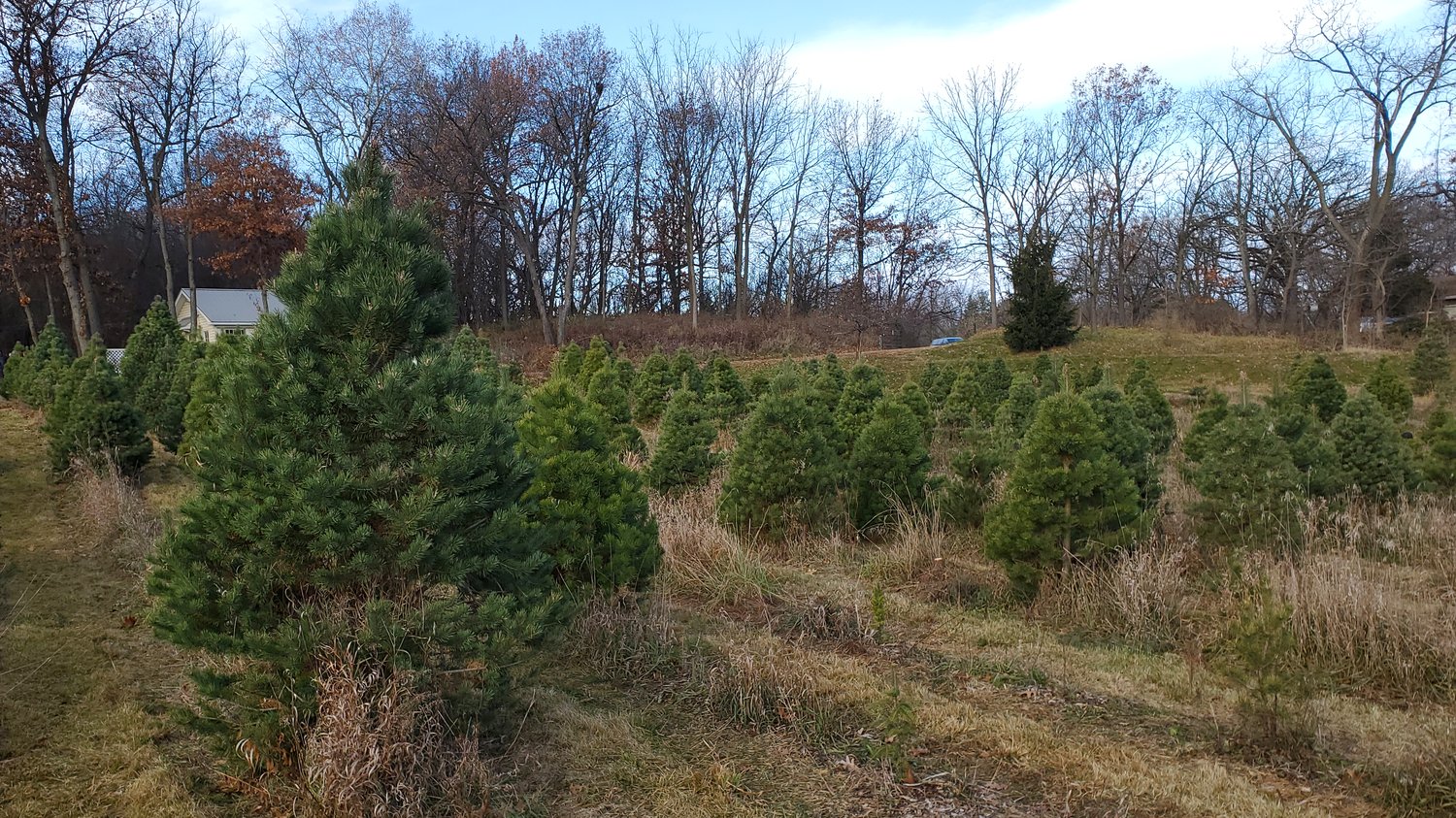
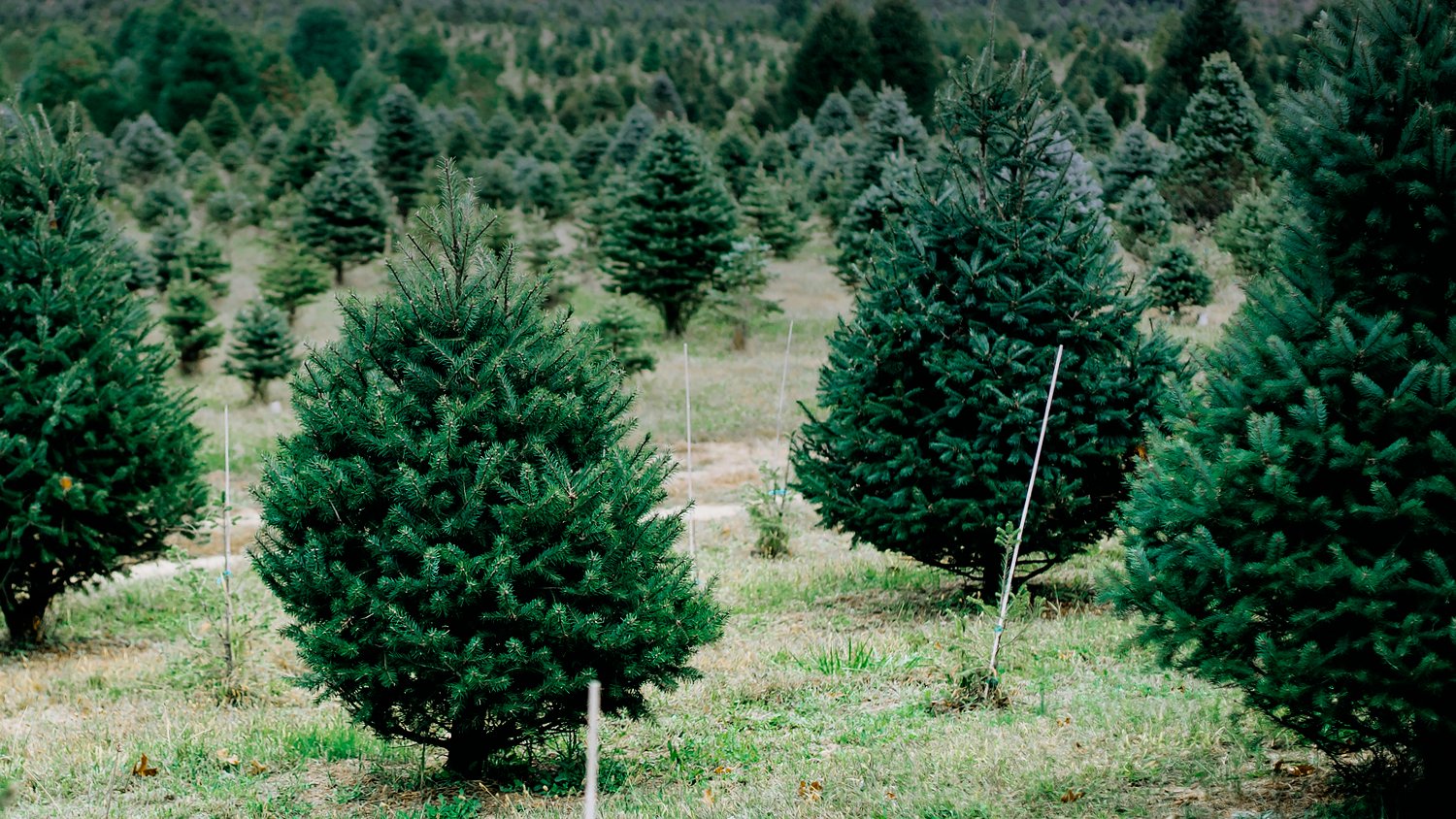
There are many reasons to buy your Christmas tree from a tree farm. First, you can be sure that you’re getting a fresh, high-quality tree. Tree farms are dedicated to growing the best possible trees, and they take care of them from planting to harvesting.
Second, buying from a tree farm is a great way to support local businesses. Many tree farms are family-owned and operated, and your purchase helps them to continue providing quality trees for years to come.
Finally, visiting a tree farm is a fun and festive experience. Many tree farms offer additional activities, such as hayrides, caroling, and hot chocolate. It’s a great way to get into the holiday spirit and create lasting memories with your family.
And this is part of the magic and the memories to be cherished for the future.
If you’ve never experienced a real Christmas tree, perhaps this is the year.
If this will be your first real Christmas tree, I would suggest starting with a pre-cut tree, just to simplify things.
And one of the benefits of “living out in the sticks” is that if you are wondering, “are there real Christmas trees near me?” The answer is yes! In fact, you can find Christmas trees on sale near you just about anywhere in McHenry County.
Lend a Hand
Please help McHenry Life be the best source of information in McHenry County.
If you manage or are involved with one of these tree farms, please help us out and go to your Details page and claim your listing. You can do so at no cost and then you’ll be able to add more information, update information whenever and as often as you need to, and add photos and links to your website and social media pages. If you don’t see your business though, then please help us by adding it!
Even if you don’t own a Christmas tree farm, let us know of any we missed or errors in what we have listed by using the form below. Please recommend us to the tree farms you visit and let them know you found information about them on McHenry Life.
Click to Submit Others, Information, or Corrections
Did we miss one or include one that is no longer relevant? Or maybe you have information to add or we need to correct our information? We greatly appreciate any help that others can provide. Please provide as much information, including links to other sources, as you can in the form below. Thanks!
Call Ahead
Hours and inventory often change, so please check the websites, which may not always be up to date, or better, call ahead to the tree farms you intend to visit.
Bull Valley Christmas Tree Farms
Moehling Christmas Tree Farm
Phone: 815-355-1738
Address: 10904 Bull Valley Rd, Bull Valley, IL 60098
Information: Details
Cary Christmas Tree Farms
Harvard Christmas Tree Farms
Ben’s Christmas Tree Farm
Phone: 630-279-0216
Address: 7719 Ryan Rd, Harvard, IL 60033
Information: Details
Conifera Tree Farm
Phone: 630-779-6249
Address: 5810 Schulz Rd, Harvard, IL 60033
Information: Details
Huntley Christmas Tree Farms
M & M Christmas Tree Farm
Phone: 847-275-8720
Address: 11715 Brier Hill Rd, Huntley, IL 60142
Information: Details
McHenry Life Experiences Newsletter
Want to be in the know, alerted about giveaways, and more?
Be sure to sign up for our Experiences email newsletter.
It’s free and we won’t blast you with emails!!!

McHenry Christmas Tree Farms
Country Pines Farm
Phone: 815-455-3083
Address: 2816 S Justen Rd, McHenry, IL 60050
Information: Details
Bill’s Friendly Evergreen Tree Farm
Phone: 847-525-9809
Address: 3102 Miller Rd, McHenry, IL 60051
Information: Details
Pioneer Tree Farm
Phone: 815-385-8512
Address: 4614 Pioneer Rd, McHenry, IL 60050
Information: Details
Get Listed
Are you a McHenry County business, nonprofit, or organization?
Be sure to claim your McHenry Life Directory listing and start making the most of your McHenry Life!

Spring Grove Christmas Tree Farms
Richardson Christmas Tree Farm
Phone: 815-675-9729
Address: 9407 Richardson Rd, Spring Grove, IL 60081
Information: Details
Union Christmas Tree Farms
Triple K Pines
Phone: 815-832-7535
Address: 15217 Hemmingsen Rd, Union, IL 60180
Information: Details
Don’t miss our other holiday guides!
Woodstock Christmas Tree Farms
Anthony’s Tree Farm
Phone: 312-379-8654
Address: 3200 Raycraft Rd, Woodstock, IL 60098
Information: Details
Grandpa’s Christmas Tree Farm
Phone: 815-337-2682
Address: 13616 IL Rte 176, Woodstock, IL 60098
Information: Details
Oney’s Tree Farm
Phone: 815-338-4108
Address: 16608 Rte 14, Woodstock, IL 60098
Information: Details
Pre-Tree Tips
Regardless of whether you want to cut your own Christmas tree or prefer to buy a pre-cut tree, there are a few things to figure out, especially if this is your first real Christmas tree.
Measurements and Space
First, think about where you want to place your Christmas tree.
Best if you can avoid sources of heat…so away from the fireplace, away from a sunny window if possible, and at least consider shutting off or covering nearby heat vents.
As you will need to keep it watered, you’ll want to make sure the tree stand or auto-waterer is easily accessible.
Get out the tape measure and record the available height, as well as distance on the remaining open sides. Once you have the maximum distances, you can start to scale those numbers back…the tree stand will raise up the bottom, need room to spare at the top for the tree topper, and room around the sides/back for ornaments and “breathing” space.
What Type of Tree?
Like most things, you have choices to make when it comes to real Christmas trees. And like most things, there is often a trade-off between quality and cost. Many of the tree farms above include information on their websites about the types of fresh trees they have and their pros and cons.
If you’d like to do a little of your own research, Good Housekeeping has this helpful article.
Ultimately, it may come down to what is available, so create a priority list of 2-3 tree types, and write them down to avoid hassles trying to remember or arguing about it later.
Get Your Christmas Tree Stand First
It’s important that you get your tree stand before you bring your new tree home.
It’s also important to make sure that your tree stand can support the size and weight of the tree you intend to purchase. But bigger isn’t necessarily better if the trunk support screws won’t close down enough to secure the tree (I’ve used some scrap wood to shim it up before).
It’s also important to make sure that the stand has a large enough water reservoir, between a quart at least, if not a gallon.
For your first real Christmas tree, you might want to start with a sturdy plastic stand. Once you are sure you like having real trees and have a general idea of the size you like, then you can invest in a more durable and/or decorative stand.
Christmas Tree Watering Systems
Real trees require real upkeep, primarily in the way of watering. In fact, a good estimate is about a quart of water per inch of stem diameter per day. Especially at the beginning, your tree may require a gallon of water a day.
So, in addition to a good stand with a sizable reservoir, you might want to look into some of the automatic watering systems, or even make your own DIY version. This isn’t a set it and forget though.
Tree Pad/Mat Floor Protector
Tree stands can break over time, or get overfilled. A little insurance here goes a long way. Invest in, even an inexpensive disposable, protective tree pad, will help absorb excess water. These feature a water barrier to protect your floor.
Tree Disposal Bag
When it comes to real Christmas trees, it’s always good to have your exit strategy sorted beforehand. These large tree disposal bags are priceless, especially if you have a tree that dries out early and starts shedding needles at the slightest movement.
Personal Tip: I cut a hole in the middle of the bag, open and roll it up like a sock, and then center it over the tree stand before placing the tree in the stand. The tree skirt (see below) hides it from view.
When it’s time to take the tree down, after removing lights and ornaments, we pull the bag up from the bottom to the top of the tree, and then tie it shut. I usually cover the wet trunk with a plastic bag to avoid dripping water on the floor. Once you get the tree to the curb, be sure to remove the plastic bags and dispose of them separately.
Tree Skirt
You don’t have to have your tree skirt beforehand, but it doesn’t hurt. But do consider whether you want to use a nice decorative or family heirloom tree skirt, or want to buy something else. Your tree skirt may get wet and will certainly, over the years at least, get some tree sap on it.
See, this is part of the adventure!
Tool Tips
Make your list of what you’ll need. If you are cutting your own, do you have a tree saw, or can the tree farm provide one? If you are bringing one, check what they recommend or even allow.
Will the tree farm bag it, or do you want to bring a tarp, something to wrap it with, or transport it bare? Do you want to lay a barrier between the tree and the roof of your vehicle? Do you have twine to tie it, or does the tree farm provide it? Figure all this out before you head out!
Tree Time Tips
The magic moment has arrived! Once again, before you head to the farm, here are some tips to help you along the way.
Timing
If you are the type that likes to have your Christmas tree up right after Thanksgiving, then an artificial Christmas tree may be the better option. Once a real tree has been cut down, the clock starts counting down.
Some tree species might last longer and some may hold their needles longer, but in general, you are looking at a 2-4 week window, and as you may want to keep your tree up through the new year, later may be better…but of course, don’t wait too long or all the good trees may be gone!
Dress Appropriately & Take Your Time
Chances are, this will take longer than you expect, especially if you are cutting your own tree. Dress appropriately, in layers, and don’t forget that the tree farm may be more open to the elements and colder than where your home is located.
Instead of your nice leather gloves, bring some leather work gloves that you don’t mind getting tree sap on. Likewise, consider the coat and clothes you wear.
Take your time. Make this part of the experience. You may not want to go for the first tree you see. Enjoy a hot cider or cocoa and stroll around. Is there a hayride, gift shop, a chance for the kids to see Santa?
Check for Freshness
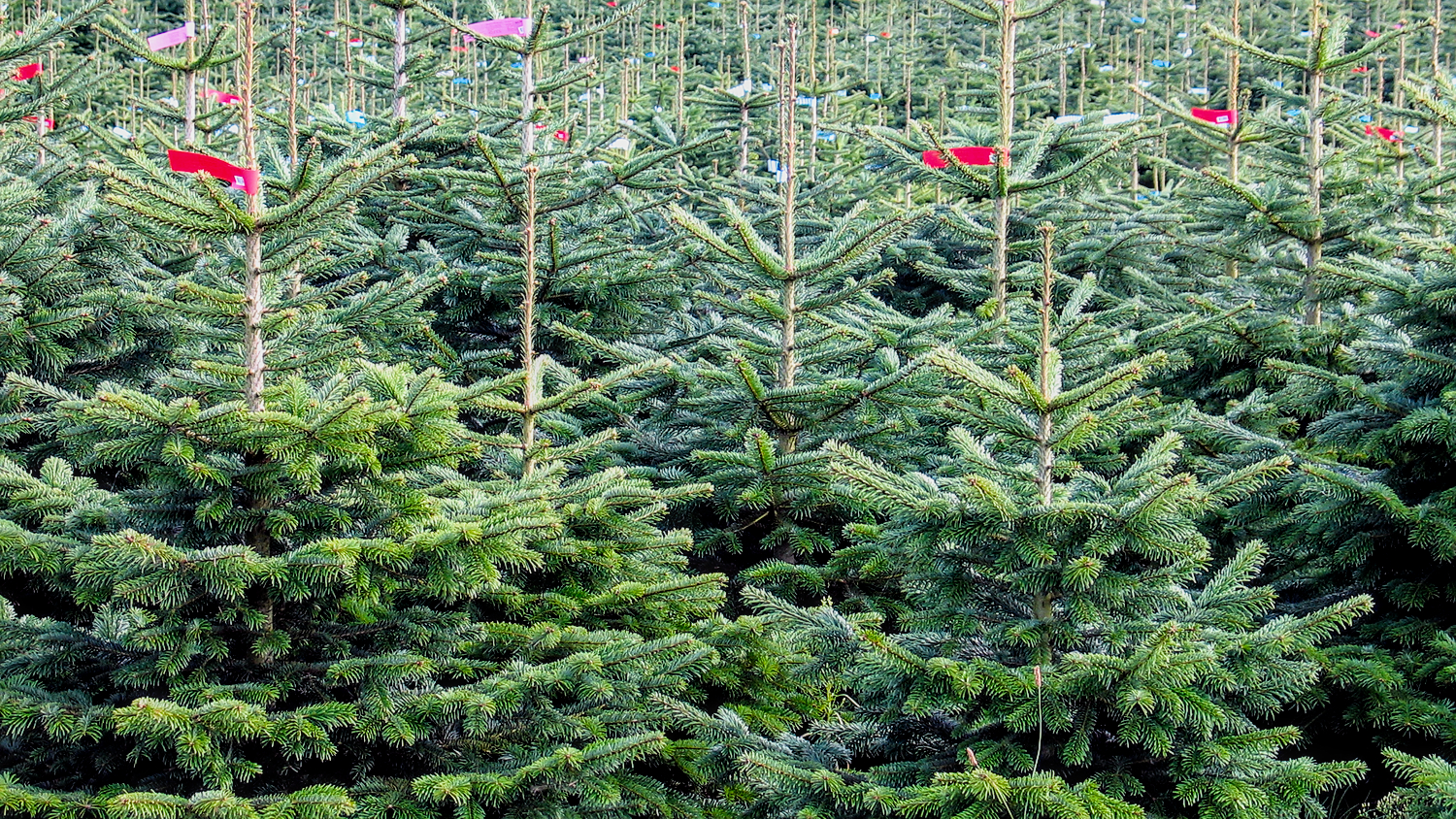
Firmly tug some of the needles…do they hold firm or fall off? If it is a pre-cut tree, pick it up and tap it against the ground a little…do needles hold, a few fall off, or do they rain down around you? Does it look green and healthy, or yellow and brown in spots?
Tree Cutting
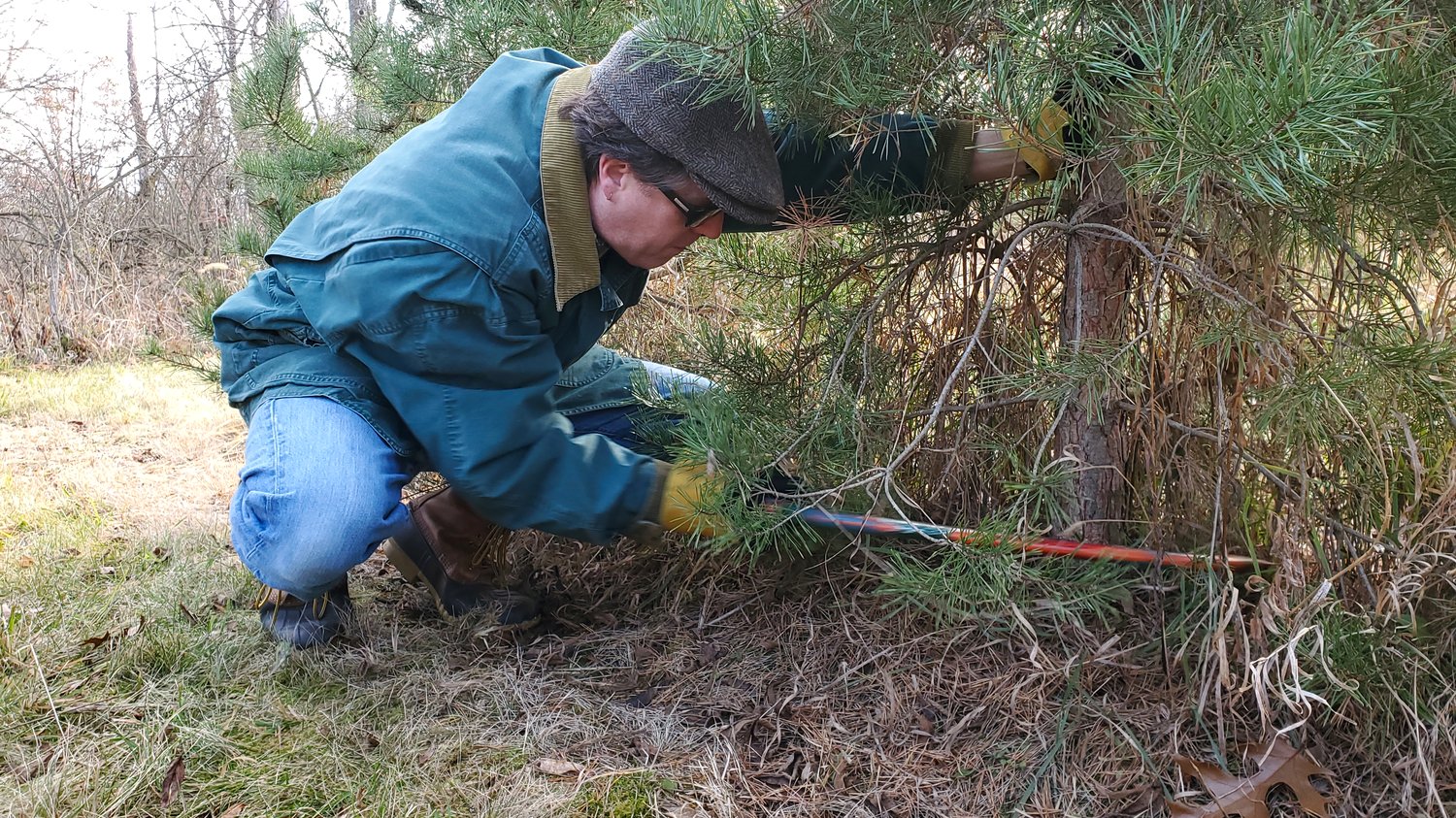
If you do opt for cutting your own Christmas tree, try cutting it as low to the ground as you can. This helps with continued tree growth at the tree farm.
This will be the thickest part of the trunk for securing in your tree stand. There also may be fewer branches to remove, leaving you with more tree to enjoy.
If you have someone helping, have them grab the tree partway up to help hold it steady and also pull it a little bit away from the side you are cutting. This will help keep the tree from pinching the saw blade, making it a lot harder to cut.
Shake It Off
Remember, this tree has been outside in the elements…and possibly, until just recently, the cozy home of bugs, birds, or other critters. Give it a good shake before moving it as well as before bringing it into your house. This will also help knock off any loose needles that were going to fall off inside.
Let Them Help
By the time you are ready to go, you will probably be really ready to go. But a little more patience pays off.
If the tree farm offers assistance, whether with a tree shaker, bagging, making a fresh cut (maybe hold off on a fresh cut unless you don’t have your own saw and/or are able to get the tree up soon after), and tying it to your vehicle…take them up on it.
Get Everything in Place
Remember, a real Christmas tree, especially a very large or tall one, is considerably heavier than artificial trees.
You want to make sure that you have your protective tree pad, tree stand, tree disposal bag (if you followed my tip), and watering system if you are using one, ready and in place before you try standing up the tree.
Depending on your stand and floor, you might be able to carefully move it a little once it is up, or it might have to stay where it is. Hopefully, you can plan to move it since it may be a little easier stringing lights if you can walk around all sides.
Fresh Cut & Water
If you haven’t done a fresh cut yet, then right before you bring it inside and stand it up is ideal. Confirm the trunk size will fit your stand and remove any lower branches that absolutely must be removed.
Have your water ready, which can just be tap water. Opinions vary, but you might want to try hot water initially, which may help liquefy sap at the base. Use cool water after that though.
Make a clean, flat cut, at least 1/2″-1″ from the bottom.
Get help standing the tree up and add water. If you are using a watering system, be sure to add water in stages so you can gauge when to stop, or risk overflow.
Take a Break and Relax
Not you, the tree. You need to start checking the light strings! We actually like to let the tree acclimate to the indoor temperature overnight. This tends to give the branches a chance to relax and “unfold.”
Enjoy & Appreciate
Whether you cut your own or purchased a pre-cut Christmas tree, be sure to sit down with your beverage of choice once you are all done trimming the tree and just take in its beauty, accepting flaws and all.
And know that you’ll never have the same tree twice!
I hope this guide is useful to you, especially if real Christmas trees are a new experience for you. Good luck in your hunt for the “perfect” tree. Embrace the uniqueness and imperfection of real trees and you’ll see Christmas trees in a new light.
Rate this article?
We’d love your feedback. Please take a moment to let us know. Thanks!

President and Founder of Identity Developments, LLC, the parent company of the McHenry Life website. My hope for McHenry Life is to create a resource and destination for the residents and businesses of McHenry County alike. A place where residents can discover new places to explore, fun events and ways to spend time, and then share those experiences with others. A place where businesses can connect with existing and potential customers, and not simply market their businesses, but share their own unique stories.